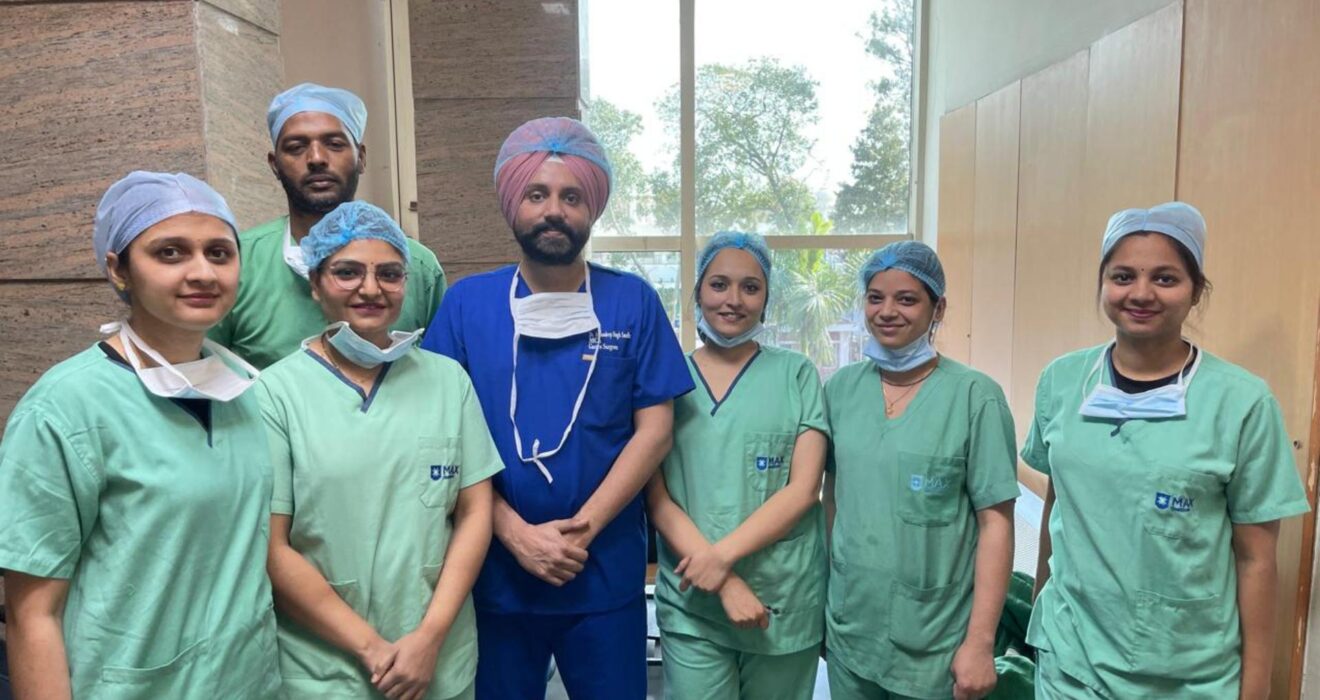
Best Gastro Surgeon in Kharar for Gallbladder and Hernia Problems
Gallbladder pain, gallstones, hernia swelling and recurring abdominal discomfort can affect everyday life and make even simple activities uncomfortable. Many patients in Kharar, Sunny Enclave, Sector 125, Landran, Gillco Valley, Mohali and nearby areas look for a specialist who can accurately diagnose the problem and determine whether medicines, observation or surgery is appropriate.
When gallbladder disease or a hernia requires surgical treatment, experience in gastrointestinal surgery and laparoscopic surgery becomes particularly important. Laparoscopic techniques are commonly used for procedures such as gallbladder removal and selected hernia repairs, using small incisions and a camera to perform surgery inside the abdomen.
For patients searching online for a Best Gastro Surgeon in Kharar, Top Gastro Surgeon in Kharar, or a gallbladder and hernia surgeon near Kharar, it is important to look beyond a title and consider qualifications, surgical experience, hospital facilities, diagnosis, treatment options and whether the recommended procedure is actually appropriate for the individual patient.
Gallbladder Problems Are More Than Just “Gas” or Acidity
The gallbladder is a small organ located beneath the liver. It stores bile, which helps the body digest fats. Gallstones can develop inside the gallbladder and may remain completely silent for years.
However, when a stone blocks the flow of bile, it can cause significant abdominal pain. Gallstone pain is commonly felt in the upper-right or central abdomen and may last for several hours. Nausea and vomiting can also occur.
This is why repeated episodes of what patients call gas, acidity, indigestion or stomach pain should not always be treated with home remedies. If the pain is recurring, severe or associated with vomiting, fever or jaundice, proper evaluation is important.
Common Gallbladder Conditions Treated by a Gastro Surgeon
Gallbladder problems can range from incidental gallstones to conditions requiring urgent surgical treatment.
Common problems include:
- Gallstones or cholelithiasis
- Symptomatic gallstones
- Recurrent biliary colic
- Acute cholecystitis
- Chronic gallbladder inflammation
- Gallbladder polyps requiring assessment
- Bile duct stones
- Gallstone-related pancreatitis
- Bile duct obstruction
Not every person with gallstones requires surgery. Many people have gallstones without symptoms and may not need treatment. Surgery becomes more relevant when stones cause symptoms or complications.
Gallbladder Pain: Symptoms Patients Should Know
Gallbladder pain can sometimes be confused with acidity or other digestive problems.
Typical symptoms may include pain under the right ribs or in the upper-middle abdomen, discomfort after meals, nausea, vomiting or pain that may extend toward the back or right shoulder.
Patients should seek urgent medical attention if abdominal pain becomes severe or is accompanied by:
- High fever or chills
- Persistent vomiting
- Yellowing of the skin or eyes
- Dark urine
- Pale stools
- Severe abdominal pain spreading toward the back
- Feeling very unwell
These symptoms can indicate complications such as gallbladder inflammation, bile duct obstruction or pancreatitis.
Do All Gallstones Require Gallbladder Surgery?
No. This is one of the most important things patients should understand.
A person may have gallstones discovered during an ultrasound performed for another reason but never experience gallstone-related symptoms. In such cases, surgery may not necessarily be required.
If gallstones repeatedly cause pain or lead to complications, however, a surgeon may recommend cholecystectomy, which means removal of the gallbladder. The decision should be based on symptoms, imaging, medical history and the patient’s overall health.
What Is Laparoscopic Gallbladder Surgery?
Laparoscopic cholecystectomy, commonly called laparoscopic gallbladder surgery or keyhole gallbladder surgery, is the most common surgical approach for gallbladder removal when appropriate.
During the procedure, the surgeon uses a small camera and specialized instruments introduced through small abdominal incisions. The gallbladder is then removed through these access points.
Laparoscopic surgery can offer advantages such as smaller incisions and generally faster recovery compared with conventional open surgery for suitable patients. However, every operation has risks, and the appropriate surgical approach depends on the patient’s condition.
In some complicated cases, severe inflammation, previous surgery or unexpected findings may mean that open surgery is safer or necessary.
Can You Live Normally Without a Gallbladder?
Yes. The gallbladder is not an essential organ.
After gallbladder removal, the liver continues to produce bile. Instead of being stored in the gallbladder, bile flows directly into the intestine. Most people can continue normal daily life after recovery from surgery.
Your surgeon will provide specific dietary and recovery advice depending on your individual circumstances.
Understanding Hernia Problems in Kharar
A hernia is another common abdominal condition that may eventually require surgical evaluation.
A hernia occurs when tissue, such as intestine or abdominal fat, pushes through a weak area in the abdominal wall. Hernias can occur in the groin, around the belly button, at previous surgical sites or at other areas of abdominal weakness.
Patients may notice a bulge or swelling that becomes more visible when standing, coughing, lifting or straining.
Some hernias cause very little discomfort, while others produce pain, heaviness or a pulling sensation.
Common Types of Hernia
A gastro or laparoscopic surgeon may evaluate several types of hernia, including:
Inguinal Hernia
An inguinal hernia develops in the groin and is particularly common in adults. It may appear as a swelling that becomes more noticeable when coughing or standing.
Umbilical Hernia
An umbilical hernia develops around the belly button. It may be small initially but can increase in size over time.
Incisional Hernia
An incisional hernia can develop at the site of a previous abdominal operation when the abdominal wall remains weak.
Ventral Hernia
A ventral hernia refers broadly to a hernia through the abdominal wall outside the groin.
The appropriate treatment depends on the type, size, symptoms and individual risk factors.
Can a Hernia Go Away on Its Own?
A true abdominal wall hernia generally does not repair itself simply through medicines or exercise.
Some small hernias may be monitored in selected patients when symptoms and risks are low. However, a painful or enlarging hernia should be assessed by a surgeon.
Treatment may involve surgical repair, particularly when the hernia causes significant symptoms or creates a risk of complications.
When Does a Hernia Become an Emergency?
A hernia can occasionally become trapped or strangulated, compromising the blood supply to the trapped tissue.
Seek urgent medical attention if a previously reducible hernia suddenly becomes:
- Extremely painful
- Hard or tender
- Unable to be pushed back when previously reducible
- Associated with vomiting
- Associated with abdominal swelling
- Associated with inability to pass stool or gas
- Associated with fever or severe illness
These symptoms should not be ignored because an obstructed or strangulated hernia can require emergency surgery.
Laparoscopic Hernia Surgery
Selected hernias can be repaired using laparoscopic techniques.
During laparoscopic hernia repair, the surgeon uses a camera and specialized instruments through small abdominal incisions. The weakened area is repaired, often using surgical mesh where appropriate.
Laparoscopic surgery can offer smaller incisions and potentially faster recovery for suitable patients, but it is not automatically the right option for every hernia.
Factors such as the size and location of the hernia, previous abdominal operations, overall health and surgical anatomy all influence the choice of technique.
Gallbladder and Hernia Problems Can Sometimes Occur Together
Some patients have more than one abdominal problem. For example, a person may have symptomatic gallstones and an abdominal wall hernia.
This does not mean that both conditions should automatically be operated on at the same time. The surgeon needs to assess each condition separately and determine the safest treatment plan.
A detailed consultation can help establish which problem requires treatment first and whether combined surgery is appropriate in an individual case.
How Are Gallstones and Hernias Diagnosed?
Diagnosis begins with a detailed medical history and physical examination.
For suspected gallstones, doctors commonly use abdominal ultrasound and blood tests. Ultrasound can help identify gallstones and evaluate the gallbladder, while blood tests can provide information about inflammation or possible effects on the liver and biliary system.
For hernias, physical examination is often important because the surgeon can assess the swelling, its location and whether it changes with coughing or straining.
Depending on the case, ultrasound, CT or other imaging may be recommended.
The objective is not simply to find a problem on a scan but to determine whether that finding actually explains the patient’s symptoms and whether treatment is necessary.
Why Choose a Gastrointestinal and Laparoscopic Surgeon?
Patients searching for a gastro surgeon in Kharar should consider whether the doctor has relevant experience with the particular problem they are experiencing.
For gallbladder and hernia conditions, useful areas of expertise include:
Gastrointestinal surgery: Experience in conditions involving the stomach, intestines, liver, pancreas, gallbladder and biliary system.
Laparoscopic surgery: Familiarity with minimally invasive techniques for appropriate abdominal procedures.
Individualized treatment: Not every gallstone requires surgery and not every hernia requires the same repair.
Appropriate diagnosis: Abdominal pain can have multiple causes, so the underlying problem should be established before treatment.
Hospital support: Complex or emergency cases may require access to appropriate surgical, anesthesia, imaging and postoperative facilities.
Dr. Amandeep Sandhu for Gallbladder and Hernia Problems Near Kharar
Patients looking for a gastro surgeon near Kharar, gallbladder surgeon near Kharar, hernia surgeon near Kharar or a laparoscopic surgeon serving Kharar and Mohali may consider consultation with Dr. Amandeep Sandhu.
His practice focuses on gastrointestinal and laparoscopic surgery, including gallbladder and biliary tract surgery, laparoscopic surgery, gastric surgery, liver surgery, pancreatic surgery, colorectal surgery, small bowel surgery and bariatric surgery.
He provides specialist care in the Mohali area, making consultation accessible to patients travelling from Kharar, Sunny Enclave, Landran, Gillco Valley, Sector 115, Sector 125, Sector 127, New Chandigarh, Kurali, Mohali, Chandigarh and nearby areas.
His listed consultation locations include Max Hospital area in Phase 6, Mohali and Smart Clinics, Phase 7, Sector 61, Mohali. Dr. Amandeep Sandhu
Patients should discuss their symptoms, previous reports, ultrasound findings, medications and medical history during consultation so that the most appropriate treatment approach can be considered.
When Should Kharar Patients See a Gastro Surgeon?
You should consider specialist evaluation if you have:
- Repeated right-upper abdominal pain
- Known gallstones with recurrent symptoms
- Gallbladder inflammation
- Jaundice associated with abdominal pain
- Suspected bile duct stones
- Recurrent vomiting after meals
- A painful or enlarging hernia
- A new abdominal or groin swelling
- Pain while coughing or lifting
- A previous hernia repair with recurrent swelling
- Persistent abdominal symptoms despite treatment for acidity or gas
Early assessment can help distinguish gallbladder disease from other digestive conditions and identify hernias that may require surgical treatment.
Why Local Access Matters for Patients From Kharar
Kharar has grown rapidly, with patients also travelling from Sunny Enclave, Sector 125, Sector 115, Landran, Khanpur, Gillco Valley, JTPL City, Kharar-Landran Road, Kurali and Greater Mohali for specialist medical care.
For patients who need gastrointestinal surgery, choosing a surgeon who serves the broader Kharar–Mohali–Chandigarh region can make consultations, investigations and postoperative follow-up more convenient.
Patients from Kharar, Mohali, Chandigarh, Panchkula, Zirakpur, New Chandigarh, Dera Bassi, Landran, Kurali, Nayagaon, Rajpura, Patiala, Sirhind, Fatehgarh Sahib and other nearby Punjab areas can discuss their individual surgical needs during consultation.